Saint Jeroen and the place of pilgrimage
The oldest traces of settlement in Noordwijk-Binnen date from around 2000 BC, but written history begins with a Scottish monk.
- Priest Jeroen (847): in 847 the Scottish Benedictine Jeroen came to Noordwijk, where he built a chapel and did missionary work.
- Beheaded by Vikings (856): in 856 Jeroen was captured and tortured by plundering Norsemen, and on 17 August 856 he was beheaded.
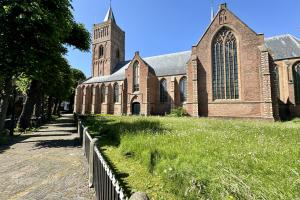
- A pilgrim church: around 980 a Romanesque chapel was built in Jeroen's honour, replaced in 1303 by a large stone church, the predecessor of today's Old Jeroens Church.
- Place of pilgrimage (1429): in 1429 the Bishop of Utrecht officially made Noordwijk a place of pilgrimage; the most important relic was a skull attributed to Saint Jeroen.
- Fire and Reformation: in 1450 a great fire destroyed Noordwijk-Binnen and the church; the Reformation in the 16th century ended the pilgrimages, and the skull has been missing ever since.
From Northgo to Noordwijk
The name Noordwijk has come a long way, and the village very nearly became a town.
- Nortgo (889): Noordwijk is first mentioned on 4 August 889, when Count Gerolf was granted Nortgo, the district north of the Rhine.
- Many names: sound changes turned it into Nortege, Norteke, Nortic and Nortdijc, until between 1459 and 1541 the name became Noordwijk, following the example of neighbouring Katwijk.
- Briefly a town (1398): on 1 April 1398 Count Albert of Bavaria granted Noordwijk town rights at the request of some residents, but on 12 March 1399 he withdrew them.
- No walls: as a result Noordwijk never got town walls or gates and remained a manor, governed by a sheriff and aldermen.
Bomschuit fishermen and the lighthouse
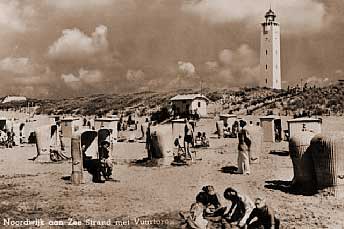
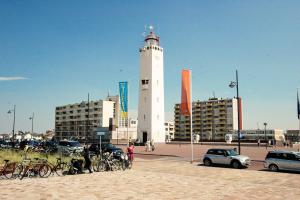
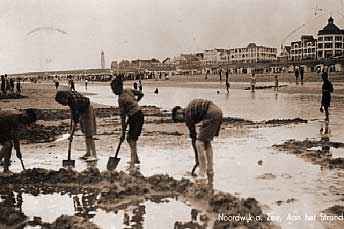
From around 1200 fishermen lived by the sea, sailing out from the beach for centuries in their flat bottomed bomschuiten.
- Fires in the dunes (1444): from 1444 fires were lit on the site of today's lighthouse, so fishermen could find their beach after sunset.
- A sizeable fleet (1474): in 1474 Noordwijk had 38 ships, catching mainly herring, cod, haddock, whiting and plaice; in Noordwijk-Binnen ropewalks made the rope.
- The end of fishing: restrictions in the French period and afterwards, a lack of shipowners and low incomes made fishing decline, and in 1913 the last bomschuit sailed out.
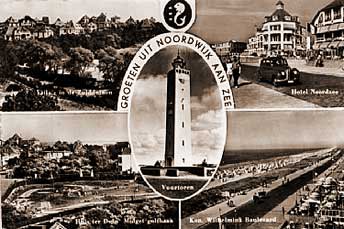
- The last keeper: Dick van Dee was Noordwijk's last lighthouse keeper from 1954 to 1986; the tower has been a national monument since 1980.
Zeeërs, Binders, herbs and bulbs
For centuries faith and trade separated the fishermen by the sea from the growers in Noordwijk-Binnen.
- Beggars and Catholics: after the Reformation Noordwijk aan Zee became Protestant and supplied many Beggars (rebels) in the Eighty Years' War, who suffered heavily, while Catholic Noordwijk-Binnen was spared.
- Zeeër or Binder: to this day older Noordwijkers in particular feel themselves either a Zeeër or a Binder.
- The herb centre: herb growing began in the medieval Sint-Barbaraconvent, and in the 18th and 19th centuries Noordwijk-Binnen was the most important herb centre in the Netherlands, trading via Amsterdam.
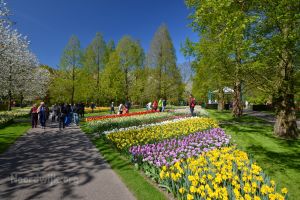
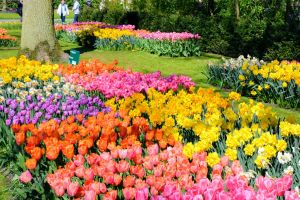
- From herbs to bulbs (1880): when chemical medicines replaced herbs, the sandy soil proved ideal for flower bulbs, and some 250 growers of tulips, daffodils and gladioli soon settled here.

The Flower Seaside Resort of Europe
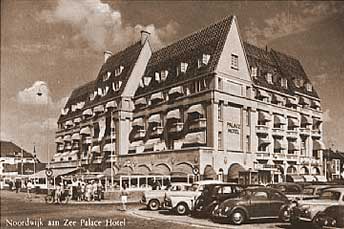
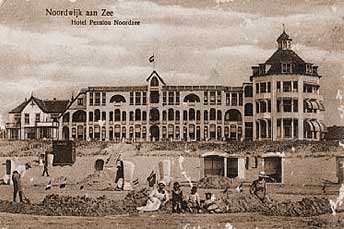
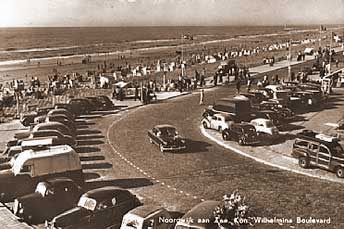
In 1866 Noordwijk's history as a seaside resort began, first for the wealthy elite and later for everyone.
- Bathing coaches (1866): because sea water was thought to have healing powers, bathers came to the beach by carriage, where bath attendants helped them into the sea.
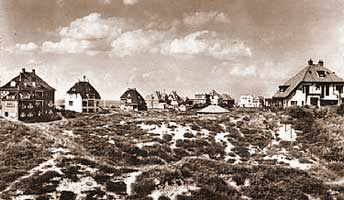
- A villa district in the dunes (1883): in 1883 the Maatschappij Noordwijk tot exploitatie van Duingronden bought dune land on the south side, where landscape architect Dirk Wattez designed a promenade of over 1200 metres with winding villa streets.
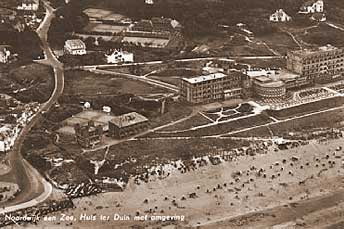
- Huis ter Duin: around the same time the first pile was driven for Huis ter Duin, the grand hotel that became Noordwijk's showpiece.
- By tram to the sea (1885): from 22 June 1885 to 7 October 1960 a tram ran to Leiden, a steam tram until 1912 and then the electric Blauwe Tram, which made the beach accessible to everyone.
The Atlantic Wall and modern Noordwijk
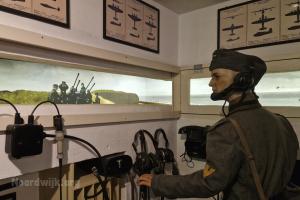
In the 20th century Noordwijk too was touched by war, after which it grew into an international seaside resort.
- Space travel: the European space research centre ESTEC lies in the dunes near Noordwijk, and its visitor centre Space Expo shows the history of space travel.
- One municipality (2019): on 1 January 2019 Noordwijk merged with Noordwijkerhout, which also includes the village of De Zilk.
- Tourism: Noordwijk aan Zee counts over a million overnight stays a year and often hosts international conferences and sports teams.